


A Tale of Two Stinsons: Katherine, Katharine, and the Early Days of Women’s Aviation

Two Stinsons.
One named Katherine, the other named Katharine.
Both pioneers in aviation, Katherine as a world-famous aviator, Katharine as an internationally respected aviation engineer, their legacies forever fated to be mingled and conflated with each other.
Katherine Stinson (1891-1977), otherwise known as “The Flying Schoolgirl” or “The Queen of the Air”, is, of the two, the individual who has lived most fixedly in our memory. This is virtually unavoidable, because everything about Katherine’s career is made to stick in the mind. Her life is almost anthemic in its sweep and scope, encompassing and exemplifying both the breakneck enthusiasms of the 1900s, and the compound tragedies of the First World War. Unfortunately, because her life was so mythic in scope, it bred a fair amount of mythologizing in the press and later accounts, so getting down to the solid core of truth about her career can be challenging, but we’ll give it a try.

She was born in Alabama in 1891, but would list 1893 on her pilot’s license, and would throughout her career weave a web of mystery around her birthdate, using her diminutive size (she was five feet tall and a hundred and one pounds as an adult) to portray herself as younger than she was for advertising purposes. Her mother was the dominant influence of her life, a woman who repeatedly asserted that there was nothing a man could do that a woman couldn’t, an assumption that drove Katherine time and again to demanding, and usually getting, equal opportunities to demonstrate and apply her skills.
She learned to drive a car at age fourteen, demonstrating a mechanical skill at operating machinery that would serve her well during the dizzying early years of aviation, where each season seemed to bring new advances in structure and control that aviators had to constantly adapt to in order to keep going faster, higher, and further than their fellow air jockeys. Her first taste of the open air came on August 31, 1911, when she won a ride in a hot air balloon in Kansas City, Missouri. Accounts differ as to whether this experience was undertaken by her after hearing how much money could be made in aviation, or whether her research on an aviation career was inspired by the balloon flight, but the end result was the same - a determination to become a pilot.
Initially, this interest was justified to her father as part of a larger plan to become a music teacher. The theory was that, to earn enough money to study piano in Europe, she could fly in air shows and during state fairs. But to do that, she would need training, which was also not cheap, so the family piano was sold to pay for pilot lessons, and hats off to Katherine for somehow convincing her parents that the best way to pursue a career in piano teaching was to sell their piano.
Katherine’s first flight in a plane occurred on January 21, 1912. The pilot she had chosen decided to try and frighten his young charge out of a career in aviation by flying at a constant and disconcerting tilt, but far from scaring her, he only made her doubt his competence as an aviator. Seeing that she was not an individual to be driven off by cheap tricks, he leveled the plane on the next run while she took mental notes on the series of handles that controlled the fabric and wood sky creature around her.

Securing a long term teacher would take several more months, but in May of 1912 Katherine found Maximillian Theo Liljestrand (1881-1913), better known to history as Max Lillie, the 73rd man in the United States to earn a pilot’s license. The jovial Swede was impressed by Katherine’s confidence and pluck, and agreed to train her, though he would often make fun of her meticulous cleaning and inspection of the planes she planned to fly. As it turned out, her attention to detail meant that, in the next seven years of performing trick aviation all over the world, Katherine never had a major mechanical issue and died in her bed 57 years after her last flight, while Max Lillie died in 1913 at the age of 31 when his plane malfunctioned.
Katherine earned her license on July 24, 1912. At that point she had had only four and a half hours of experience in the air, which is literally ten times less than the minimum required amount of air time for a license today, but a not uncommon amount for the era. She received license #148, and was at the time just the fourth woman in the United States to have earned a license.
As it happened, by the time she earned her license, Katherine was the only woman left in the skies. Julia Clark, the third licensed woman pilot, had died after an air accident on June 17, 1912, while Harriet Quimby, the first, died less than a month later on July 1 after being thrown from her plane. Mathilde Moisant, the second, had survived a crash in April (the same day the Titanic met its fate), but a week after Quimby’s death, announced she would not attempt to fly again. Katherine did not seem over-fazed by all this tragedy, and had the skies to herself, though in just three months the woman who would come to be her arch rival, Ruth Law (1887-1970), received her own license.
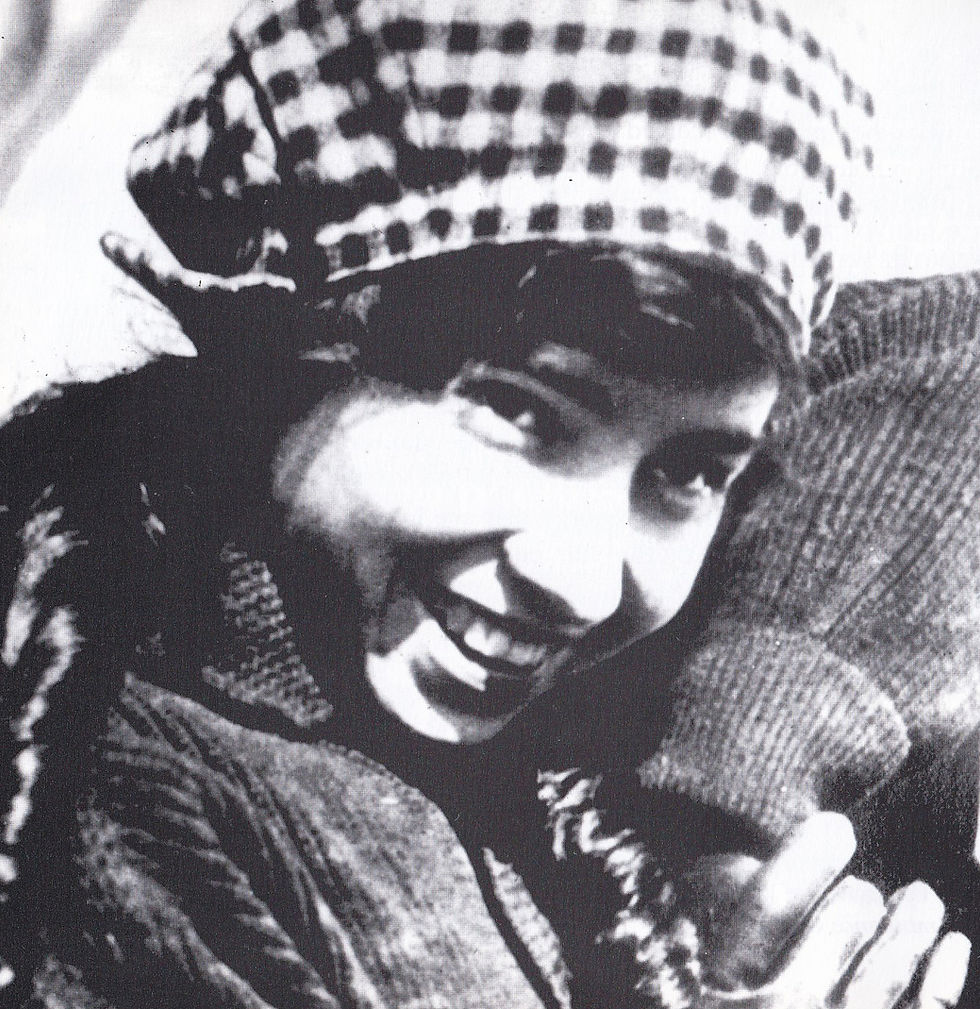
For the next seven years, Katherine Stinson balanced her career as one of the pre-eminent aviators of her age with her interest in the Stinson Aviation Company, initially founded by herself and her mother with a view to constructing their own airplanes, but which evolved over time into a pilot school funded by Katherine’s stunt flying, and grounded in her sister Marjorie’s solid teaching instincts. While the school trained dozen of aviators, Katherine was developing new ways to thrill crowds, not only perfecting the loop de loop and nosedives originating with other flyers, but designing her own tricks, such as the “dippy twist loop”, and the use of magnesium flares to perform dramatic tricks at night, as she did in 1914, during which she became the first woman ever to perform at night, and the first human ever to use a plane to do a night time light show. She also invented skywriting as an aviation stunt, performing it for a California show in 1915, spelling “CAL” in the sky for the amazed crowd below, years before both Jack Savage’s and Allen Hardcastle’s skywriting displays which historians usually cite as the First example of aviator skywriting.
The press loved “The Flying Schoolgirl” for the quality and daring of her flying, for the optics of a woman who to all appearances seemed like she could still be in high school handling the rough and tumble airplanes of the age, for her quick banter, and her striking air fashions. Hearing from Max Lillie about the superb flying weather available in Texas (particularly in comparison to that of Chicago), she and her family moved their operations there, creating their own airstrip in 1916, now known as Stinson Field, which is the second oldest still functioning civilian airstrip in the nation. By 1916 she was a figure of international renown, and was asked to perform in Japan and China, where she wowed crowds, met with royalty, and inspired women of both nations to imagine a new and more equal future for their daughters.

Returning to the United States after the announcement of its entry into World War I, she undertook a fundraising mission for the Red Cross, flying over a series of towns in the East, “bombing” them with Red Cross leaflets, then landing to collect donations from people who would rush up to the plane to give what they could. In one day, she collected 2 MILLION dollars in donations while also demonstrating her skill at endurance riding, which she would employ to even greater effect six months later.
One thing that had been eating away at Katherine since before she left for Japan was Ruth Law’s distance record set in November of 1916. Law had flown for 590 uninterrupted miles, a record not just for a woman pilot, but for any pilot. Katherine was so keen to break it that she almost cancelled her Japan trip but fortunately her brother talked her down from that decision, and so it was not until December of 1917 that Katherine, after her usual meticulous inspection of her craft, lifted off into the California skies in a plane built to her own specifications and design, in an attempt to make the flight from San Diego to San Francisco in one straight shot. Using a map set on a series of rollers so she could advance it as she travelled north, she made the 610 mile trek in nine hours and ten minutes, and at the end had only two gallons of gas left in her tank.
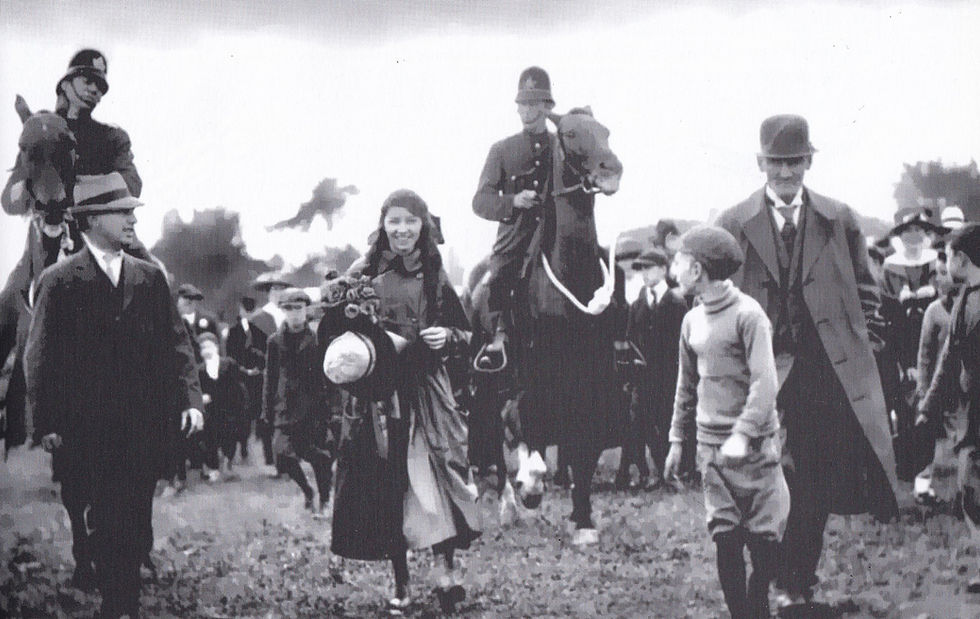
It was a momentous achievement, which she topped just six months later, setting a new endurance record of ten hours and ten minutes in the air on her solo flight from Chicago to New York. She had nothing left to prove in terms of her skills as an aviator, but what she wanted most was to put them at the disposal of her country. She had previously approached General Pershing during the hectic days of Pancho Villa’s raids with the idea of using her plane to gather intelligence, but was turned down. Having set two separate world records for aviation in the meantime, however, she felt that her chances were good to be accepted as an aviator in the First World War.
That was never going to happen, of course, no matter what skill she had. To put a woman deliberately in harm’s way ran against every instinct of military procedure at the time, and she was distinctly and decisively rejected. Undeterred, Katherine got on a boat and enlisted as an ambulance driver in France, driving herself to the point of exhaustion running bodies back and forth between the front and its makeshift hospital system, losing track of the days, grabbing what sleep she could on the road, and utterly ruining her health in the process, developing a case of tuberculosis that would see the end of her flying career on her return to the States.
After the war, Katherine spent several years recovering in a sanatorium in New Mexico, but did manage at last to beat the disease, marry, and establish herself successfully in a new career as an architect, designing homes across New Mexico in the pueblo style.
As the sun was setting on Katherine’s aviation career, another Stinson halfway across the country was taking her first steps into life. Katharine Stinson was born on September 18, 1917, in North Carolina. She loved fishing and building model airplanes and generally rambling about the family farm. By complete chance, at the age of ten, Katharine was taken up in a plane by Katherine Stinson’s brother Eddie Stinson, who happened to be in Raleigh on business. This was still in the infancy of flight, and Eddie didn’t ask Katharine’s parents for permission, and Eddie was the worry of Katherine and Marjorie for his alcoholism and recklessness (he would die in an air crash in 1932), but fortunately tragedy stayed its hand that night and Katharine left the experience even more enchanted than ever with flight.
Five years later, she met another early aviation legend, and her absolute idol, Amelia Earhart, who was in Rayleigh on a Beech-Nut Gum promotional stint. Earhart gave her some important advice, that flying was fun, but that the money and stability was in aeronautical engineering. She took the message to heart, which in North Carolina meant plotting a course for NC State, but upon arriving there she was told that, as a woman, she had to go to the Women’s College at Greensboro first, and could perhaps transfer to State as a junior. Katharine was not deterred, and instead went to Greensboro, took 48 credits in one year to get her freshman and sophomore years over with simultaneously, and then applied to State the following year, where though the professors bridled at her presence as the only woman engineering student on campus and openly stated that they would make life difficult for her, her fellow students were generally highly supportive of her studies, particularly after she proved herself to be a top student, earning the Order of Saint Patrick her senior year.
Right out of college, she became the first woman engineer at the Civil Aeronautics Administration, the precursor of the Federal Aviation Administration (FAA). She was the agency’s go-to expert on safety standards and protocols, where “Call Katy” became the standard mantra for any problem related to aeronautical safety during her thirty-two year tenure there. During the early years she was essentially the only person writing airworthiness directives, often piloting planes herself with known flaws in order to develop procedures for recognizing and repairing them.

With the arrival of World War II she was charged with the conversion of airplanes into gliders for pilot training, and then with their re-conversion at war’s close. In 1950, she was one of the driving forces behind the founding of the Society of Women Engineers, becoming its third President in 1953, quintupling the number of members and adding 25 member clubs to the organization during her tenure. The SWE continues to this day, with some 47,000 members spread across 60 global affiliates.
Katharine retired in 1973, but was regularly honored by the aerospace industry in the years after her retirement, with NC State naming a street, Katharine Stinson Drive, in her honor in 1997, making up in some degree for the hard time it gave her when she first sought to pursue her aeronautical education there.

Katherine passed away in 1977 at the age of 86, and Katharine in 2001 at the age of 83, and though it seems impossible that they never met at any point in their long lives, I haven’t been able to find any pictures or accounts showing that they did, that the Flying Schoolgirl and the safety whiz of Call Katy fame ever had a chance to sit down and talk about the thing they loved best, the pursuit of the sky. But between them, from 1912, when Katherine first took to the air, to 1973, when Katharine left the aeronautical industry, they made the sky a more magical, but also safer, place to be. They showed the wonder and whimsy of flight, but also demonstrated the rigor and care needed to bring people securely back to ground after their dreamy interludes above, and that mix of romanticism and grit charms us still, and ever will.
FURTHER READING:
There is a lot written about Katherine, not so much about Katharine. Mary Powell’s Queen of the Air (1993) is a fun semi-fictionalized account of her life, while Debra Winegarten’s The Flying Schoolgirl (2000) is filled with some of the most gorgeous archival photos of Stinson’s life that you are ever likely to see. Much harder to find is the 1969 book by John Underwood, The Stinsons, about the whole aeronautical dynasty. I came across Katharine primarily through the pages devoted to her in Margaret Layne’s wonderful Women in Engineering: Pioneers and Trailblazers (2009), and in various articles and tributes written about her towards the end of her life, but no book-length treatment of her life has been written. Yet.


Comments