


Hope Where There Was None: Kadambini Ganguly and Women’s Medical Care in India

In early 19th century Bengal, to find yourself pregnant was to see stretching before you nine of the most agonizing months of your existence. Considered Unclean by social practice, you were removed to the most isolated room within the house (the sutikagriha) if you were lucky, or to a dismal outbuilding if you weren’t, where all openings to the outside world were sealed shut, and a fire was set to burning so that the room was permanently excruciatingly hot, dark, and filled with smoke. One slept on a straw mat, suffocating, over-heated, and bleary-eyed, until the day when birth was close, when the dai was sent for, who felt it her job to make the delivery happen as quickly as possible, sometimes placing heavy weights on the abdomen to force birth, sometimes inserting dirty rags into the vaginal canal, and using brute force to pull a child out if necessary, resulting in tearing and hemorrhaging that producing staggering mortality rates for child and mother alike.
Replacing this system which brought regularly recurring and entirely unnecessary misery onto one half of the population was a mammoth task undertaken in concert by reformers from Britain and progressives in India, who saw this socially condoned mass suffering and decided that large scale action had to be taken. In Bengal, this change was spearheaded by the members of the Brahmo Samaj, a movement growing out of the work of Rammohan Roy (1772-1833), whose 1819 pamphlet Sati brought worldwide attention to the practice of involuntary ritual widow suicide, leading to its abolishment in 1829. The cause was continued in the work of Keshab Chandra Sen (1838-1884), who argued for the education of Indian women, and whose influence resulted in the creation of women’s correspondence education courses in the early 1860s, and the founding of a women’s discussion circle in 1865.
Admirable as Keshab Chandra Sen’s foundational work was, it still bore with it some lingering traditional assumptions. Yes, women were to be educated, but certain subjects were still to be kept from them (particularly mathematics and the sciences), leaving it to a slightly younger generation of reformers to push for more thorough-going changes in women’s place in Indian society, including Sivanth Sastri (1848-1919), who worked against the ban on widow remarriage, allowing women who had lost their husbands something beyond the “living death” of Indian widowhood, Sasipada Banerjee (1840-1924), who worked to create educational opportunities for older, married women and to break the societal pressure for women’s seclusion, and most importantly for us today, Dwarakanath Ganguly (1844-1898), the publisher of a periodical written exclusively for women, advocating women’s social equality, and the co-founder of a school that aimed to teach women the sciences as well as the refined topics that had been allowed by Keshab Chandra Sen.
Working in tandem with this growing domestic movement to create fundamental social change in the status of women in India were British-sponsored initiatives to attempt to improve the state of midwifery in the nation by establishing new medical institutions and certificate programs that encouraged dais to adopt some of the sanitary practices of Western medicine. These programs generally fell short of their objective, hampered by distrust on the part of the dais, the programs’ unwillingness to teach in anything but English, and the fact that the handful of trained nurses and midwives produced tended to stay in urban centers for their practice, instead of diffusing out into the rural regions that needed them the most. Though it didn’t achieve all that it wished, however, it is not to say that these early steps of the 1870s to provide women’s medical education in India accomplished nothing, setting an example for the urban population of women achieving success as women practitioners which would go on to inspire its first wave of fully fledged doctors.
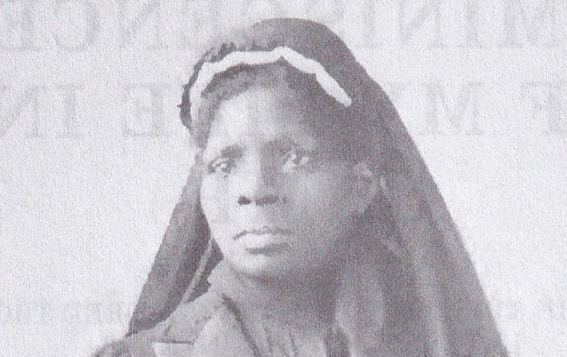
These two threads, that of the state-sponsored movement to improve the maternity conditions for Indian women, and that of native reformers to produce a social change that would raise women up from the grinding hardship that led to some of the world’s highest suicide rates, converged in the form of Kadambini Ganguly (nee Basu) (1861-1923), the first Indian woman to practice medicine in India after receiving a medical degree from a Western institution. She was born on July 18, 1861 at Bhagalpur to a father who believed strongly in the need for educational reform in India. A teacher himself, he attempted to create more opportunities in Bhagalpur for women to receive an education, and in 1876, he happily sent his daughter to attend a new educational institution, founded by Bengal’s leading lights in the charge for women’s equality and learning. This was the Banga Mahila Vidyalaya, which was an outgrowth of a school started by reformer Annette Akroyd in 1873 after she split with Chandra Sen over his conservative restrictions on what he thought women should be permitted to learn. Her school taught physical science and mathematics to women along with geography, English, history, and needlework.

One of the key individuals driving this school was Dwarakanath Ganguly, whose journal Abalabandhab (Friend of the Women) had been on the bleeding edge of women’s rights issues since its founding in 1869. Ultimately, Akroyd pulled out of the school in 1876, sparking a name change and a new inaugural class, among whom was Kadambini. She was one of the institution’s star pupils and in 1878 obtained permission, with classmate Sarala Das, to take the Entrance Exam for the University of Calcutta. She passed that test with distinction, only one mark shy of full First Division status, a performance enthusiastically celebrated by the Bengali progressive press, as well as the British educational establishment, both of which worked together to ensure that she have access to higher education, hiring new teachers at Bethune School (which had absorbed the Banga Mahila Vidyalaya) to teach college-level courses and granting Kadambini, in recognition of her academic accomplishment, a series of scholarships to see her through the rest of her college career.
For the next stretch of her education, Kadambini led a unique and charmed life, supported fully by Dwarakanath, his progressive social circle, and high placed British educational officials. She passed her FA in 1880, and in 1882 was awarded her BA along with classmate Chandramukhi Basu (1860-1944), who was destined for an important career in Indian education all her own. She had obtained this BA because the bylaws of Calcutta Medical College required a BA for admission, but when she presented herself as an applicant she was told that, in spite of meeting the educational requirement, she could still not be admitted on account of her gender. Dwarakanath and the rest of the educational progressives of Bengal thereupon swung into action, applying pressure through their contacts and journals, joined by British members of the educational establishment like A W Croft, the Director of Public Instruction, who leaned on Mr. R. Harvey, the principal of the Medical College, to accept women applicants. Harvey, for his part, was all too happy to do so, but had to deal with the medical faculty of the college who were strictly against the admission of women, for many of the reasons that the medical establishment of England had stated in their attempts to stop Sophia Jex Blake and the Edinburgh Seven, i.e. that women were a distraction in the classroom, were not needed in the profession, lacked the temperament to make good doctors, and, worst of all, that their womanly qualities would be destroyed by medical study, making them unmarriageable.
The political pressure applied by Dwarakanath and Croft bore results sooner than they could possibly have hoped from their knowledge of the travails women in England underwent in securing their medical education, and in 1883 the ban on women was lifted, and Kadambini was admitted to Calcutta Medical College for the coming term. 1883 was also the year that she and Dwarakanath became wife and husband. Their union was a happy one, though he was some sixteen years her senior and her former teacher. Time and again in their lives together, he made sacrifices so that she could progress in her chosen career, and when he passed away in 1898 Kadambini retired to a life of relative seclusion.
We don’t have much data on these years of Kadambini’s life until she emerges in 1886 to take her medical exams. Here, she was successful in all of her theoretical paperwork, but one of the professors placed her one point below passing in one of her practical examinations, which meant that she could not receive a full Medical Degree. She appealed the decision believing that prejudice lay behind that one teacher’s refusal to pass her, but the college did not rule in her favor, granting her a GBMC (Graduate of Bengal Medical College) instead of an MD. This did allow her to practice medicine, but was a far cry from the prestige of the MD, and when she thereupon went to work at the Lady Dufferin Women’s Hospital, she found herself the lowest hen in the pecking order, persistently passed over for promotion, those jobs instead going to European women who didn’t speak the local languages and who had come to India to get medical experience that they couldn’t easily get in England.

The solution was clear - she would have to go to Great Britain, and get the sort of degrees that could not be overlooked. Dwarakanath agreed, volunteering to take complete charge of raising the children while she did what she needed to do thousands of miles away to realize her intellectual and professional potential. In 1893 she went to Scotland and succeeded in passing the Triple Qualification exams in July, earning the Licentiate of the Royal College of Physicians (LRCP), Licentiate of the Royal College of Surgeons (LRCS), and Licentiate of the Faculty of Physicians and Surgeons (LFPS), the only woman to do so that year.
Kadambini’s whole British adventure lasted only a little over three months, and by November 1893 she was back in India, first working at the Eden Female Hospital, taking charge of the outdoor patients and giving lectures at Campbell Medical School on women’s health, an odd arrangement of responsibilities which didn’t suit her, pushing her in the direction of private practice, in particular serving as physician to the Nepalese Royal Family, which opened the doors of many of the region’s upper class families and to the zenanas of purdah-observant homes.
In addition to her rising fame as a physician, Kadambini during these years became a known quantity on the Indian political scene, where she was considered the great exemplar of everything the progressive Brahmos wanted Indian women to become. In 1889, the fifth Indian National Congress took the extraordinary step of allowing women to attend, and the most distinguished among those first ten delegates was Kadambini Ganguly. As important of a step as this was, however, the impact was soon blunted when it was made clear to the women that they could be seen at the Congress, could attend the sessions, but were not permitted to speak at them, a fact which was greeted with disbelief by the progressives, who managed to ensure that women could act as full participants in the sixth Congress, where Kadambini had the distinction of being the first woman to address the assembled delegates, though it was only to call for a vote of thanks to the President.
Whatever the content of the speech, that a woman was addressing the nation’s most important political gathering at all was a thing of note in a nation that would have, a century before, taken the idea of a woman participating in politics as so unlikely as to border on the farcical. Even after she retired from public life after the death of Dwarakanath, she would re-emerge from time to time to support worthwhile causes, such as in 1915 when she strongly and publicly opposed the efforts of Calcutta Medical College to close its doors to women students once again.
Kadambini Ganguly was, from the time of her remarkable performance on the University of Calcutta entrance exams at the age of 17, until her sudden death in 1923 at the age of 62, the most celebrated Brahmo woman in the nation. Like Anandibai Joshee, she had gone to a foreign land and earned esteem there for the quality of her medical mind, but unlike Joshee, she was gifted a life long enough to take that promising start and turn it into a career in both medicine and politics which inspired generations to come, and still inspires young women in India today. Never again after her very public successes could an Indian girl be truthfully told that a career and political action were incompatible with a happy marriage and secure family life, for everyone knew that Kadambini had done it all, and that what was done once, could be done again. Unfortunately, there is still a ways to go - women in India make up only 29% of doctors, and only 18% of medical leadership according to 2023 data (though don’t get too comfortable on your high horse - here in America, 2022 WHO data shows women only making up 37% of the nation’s doctors), but the numbers are heading in the right direction, a trend started a century and a half ago by a small group of people who imagined a better world, and took steps to create it.
FURTHER READING:
In English, you pretty much have one choice - Mousumi Bandyopadhyay’s 2011 Kadambini Ganguly - The Archetypal Woman of Nineteenth Century Bengal, put out by Delhi’s The Women Press. It is a fascinating book, though the edition I have is littered with typos, some very funny (my favorite - “With the expansion of imperial economics and administration, a more comprehensive hold over the lives and labour of the poop were sought, with medicine being catapulted to a central agency…”). Once you get used to those, however, what you have is a compelling account of the 19th century Indian progressive movement, the Indian women’s movement, both in terms of its push for education and for greater social equality, and the particular life of Kadambini at the center of it all. It’s not a particularly easy book to track down, but if your interest is the development of women’s scientific education in India, you more or less have to have it.


Comments